How Many Jars Can You Fill? A Quick Calculator for Extraction Day
Last updated: March 2026
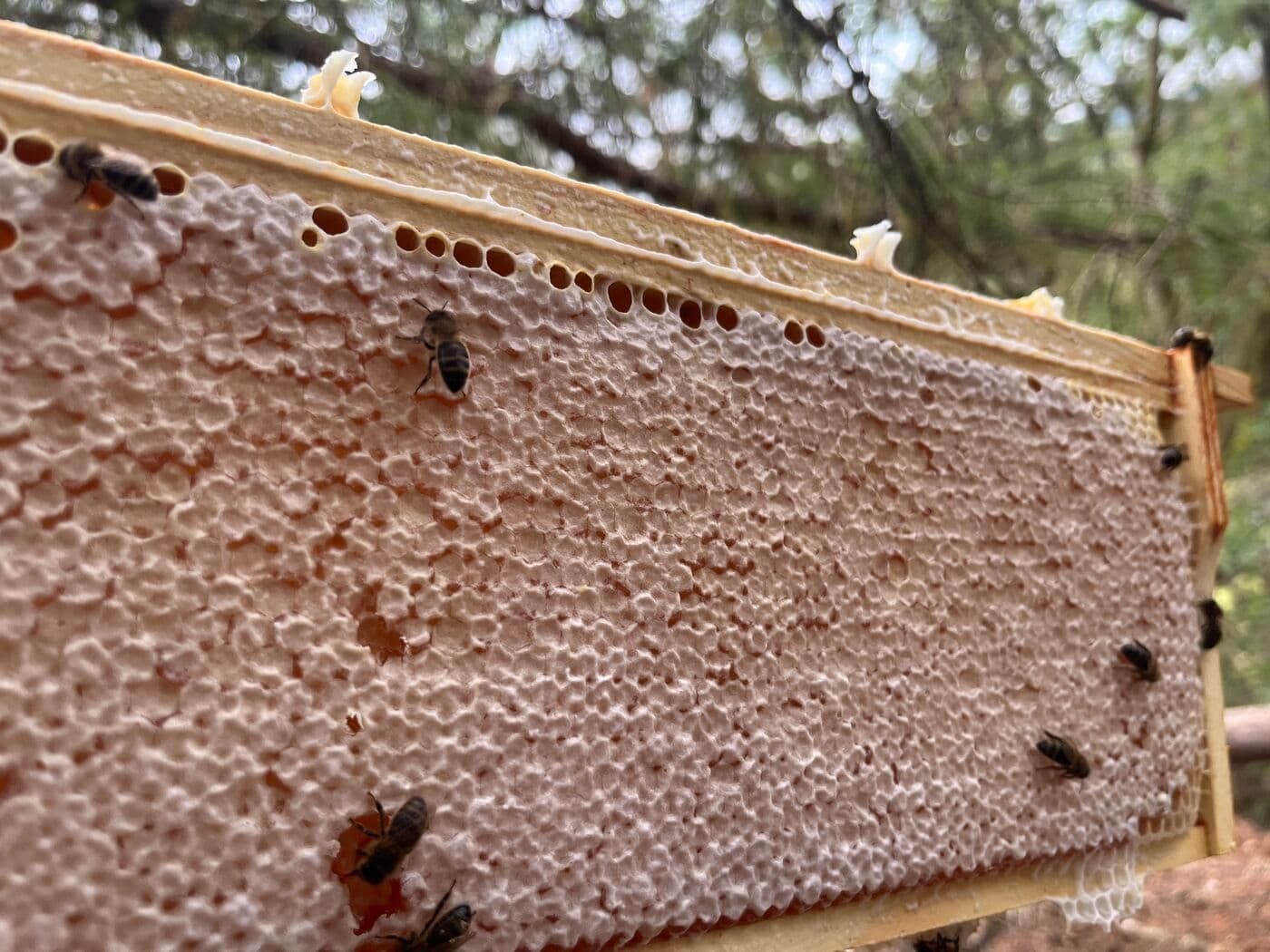
Every beekeeper has stared at a full bucket after extraction and tried to work out how many jars to order. Get it wrong and you either run out of jars mid-bottling — while honey sits in the bucket slowly crystallising — or you end up with a shelf of empties you did not need. A few quick sums on paper never quite match reality once you account for different jar sizes, sticky losses, and the odd generous pour. This calculator does the maths for you so you can line up jars, lids, and labels before you crack the gate valve.
The Calculator
Add your buckets (common UK sizes are built in, or enter a custom weight in kilograms or pounds). Pick a jar size, or open mix mode if you want to fill one size first and then use the remainder for another. Toggle the overfill buffer if you routinely run a little over the declared net weight.
Bucket-to-jar yield estimator
See how many jars you can fill from your bulk honey. All figures are net weight in grams.
How much honey?
- 30 lb (13.6 kg)13600g
Total honey: 13.6kg(13600g)
Jar size
Your jars
| Jar size | Jars | Honey used |
|---|---|---|
| 340g | 40 | 13600g |
Leftover: 0g
Barely enough to lick off the spoon.
Which Jar Size Should You Use?
There is no single right answer — plenty of us jar in two sizes and call it a day. Still, it helps to know what each size is for.
454g (1lb) is the traditional UK standard. Customers recognise it instantly, it is the size many honey shows expect, and it feels substantial in the hand. If you only ever sell one jar, this is still the one most people picture when they say "a jar of honey."
340g (12oz) has become an increasingly popular primary retail size. You fit more jars per bucket, the price point looks friendlier on a market stall, and your margin per gram often improves compared with the full pound — without feeling like a stingy portion.
227g (8oz) shines for gifts, impulse buys, and customers who want to try your honey without committing to a full pound. People routinely pay a higher price per gram for smaller jars, so they can be quietly good for your bottom line.
113g (4oz) and similar mini jars are ideal for tasters, wedding favours, and gift sets where presentation matters more than volume. They are fiddly to fill, but they open doors to markets the big jars never will.
Many beekeepers settle on a main line — often 340g or 454g — plus a smaller gift size. The calculator's mix mode is built for exactly that kind of split.
The Overfill Question
UK trading standards expect the net weight on the label to reflect what is in the jar. In practice, your honey must be at least the declared net quantity — not a gram under. Most beekeepers deliberately fill a few grams over the line so a slight variation on the scale does not land them on the wrong side of a complaint.
The calculator's overfill buffer lets you bake that habit into the numbers. Something in the +5g to +10g range per jar is typical; adjust to match how you fill and how tight your process is. It is almost always better to plan for one fewer jar than to risk an underweight jar going out the door.
Planning Your Jar Order
Order jars, lids, and labels before extraction day, not after. Once honey is sitting in a bucket, especially early-season nectar that sets quickly, time is not on your side. Having everything on the bench means you can bottle the same day or the next, keep air exposure down, and avoid the demoralising pause where beautiful honey sits while you wait for a delivery van.
Use the calculator to rehearse your plan: total honey in, main retail size first, then smaller jars from what is left. When the numbers look right, place the order. Your future self, standing over a warm settling tank, will thank you.
Beyond the Calculator
Knowing how many jars you need is only part of the puzzle. When you are ready for the next steps, these guides have you covered:
- Now you know how many jars — work out what to charge
- UK Honey Labelling Rules: A Simple Guide
- Do I Need Insurance to Sell Honey?
Get the counts right, get the labels right, and you are most of the way to a clean, confident harvest season.